

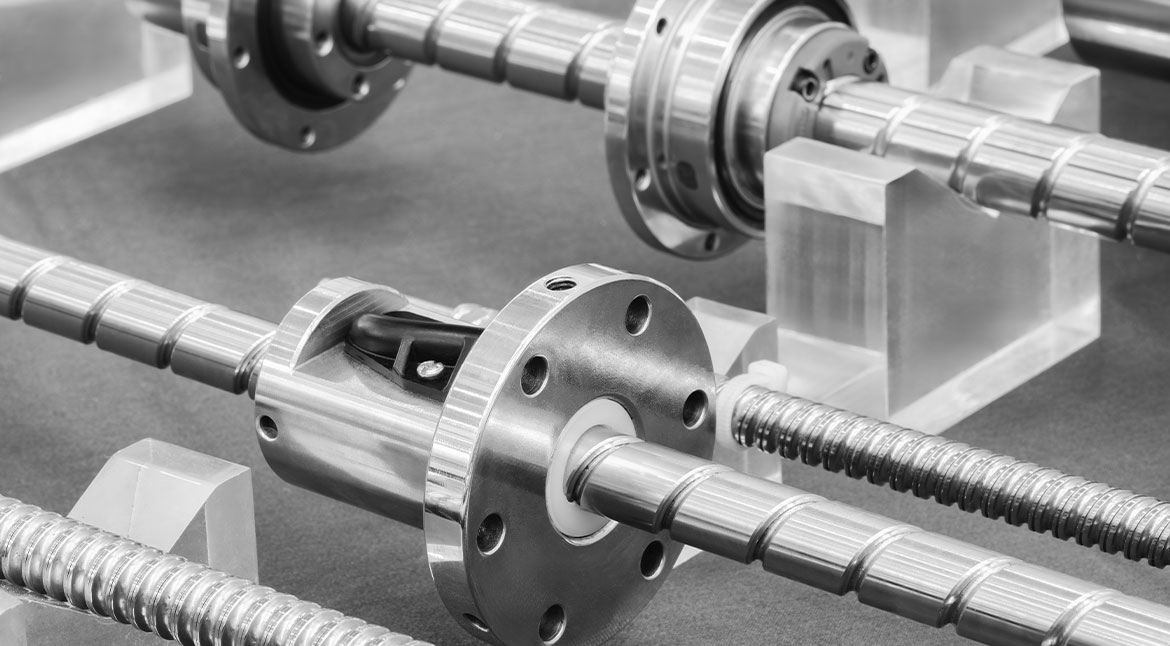
Industrial manufacturers are turning to advanced materials like titanium, Inconel, and carbon fiber reinforced polymers (CFRP) to meet next-generation performance demands in aerospace, defense, energy, and transportation. These materials may unlock lighter, stronger, and more durable components, but they also bring new challenges to production. Straightening shafts made from exotic alloys or composites requires a level of expertise beyond traditional metals to prevent premature fixture wear and workpiece damage. MAE-Eite’s new workpiece setup services are engineered specifically for these next-gen materials, ensuring that straightening operations deliver accuracy and repeatability without compromising material integrity.
Specialized New Workpiece Setup Services for Next-Gen Materials
Manufacturers adopting exotic alloys and composites often produce mission-critical parts where precision cannot be compromised. From aerospace shafts to energy system components, even minor distortion can translate into premature wear, vibration, or catastrophic failure. MAE-Eitel’s specialized setup services give operators confidence that their most advanced workpieces will be straightened to exact tolerances, protecting both performance and long-term value. Experts in engineering tooling and fixtures to accommodate a vast range of materials, MAE-Eitel custom designs solutions that consider the unique properties and behaviors of exotic and hardened materials, minimizing clamping stress, preventing unwanted deflection, and ensuring dimensional stability.
Why Standard Methods Fall Short
Exotic alloys and composites behave differently under load and temperature. Titanium and Inconel retain strength at elevated temperatures but expand unevenly, creating thermal distortion when heated by the force and friction involved in straightening. CFRP shafts, on the other hand, exhibit anisotropy, or direction-dependent properties, that make them unpredictable when bent and clamped. In each case, standard fixturing and straightening approaches designed for conventional steels simply aren’t enough. MAE-Eitel addresses these material-specific challenges with expert new workpiece setup services that focus on fixture designs that account for differential thermal expansion, anisotropic stress response, and shaft flexibility, providing the foundation for controlled, repeatable straightening.
Overcoming the Challenges of High-Strength Straightening
It takes immense power and force to manipulate materials specially engineered for superior strength, such as titanium or Inconel. Unless tooling is as durable as the material itself, fixtures will wear out excessively, potentially damaging the equipment and workpiece. However, fixtures with higher Rockwells than the part can crush or break the workpiece. To prevent this, MAE-Eitel ensures that tooling and fixtures are just hard enough to withstand the required forces without damaging the workpiece.
The Critical First Step
Whether the components are made from standard steel or exotic and hardened alloys, setting up new workpieces requires a careful design evaluation and feasibility study. Expert engineers analyze the workpiece print for complexity and tonnage requirements and validate the material type. When it comes to exotic materials, tooling and fixtures must be carefully selected based upon a few key factors, including:
- Part’s Hardness
- Material’s Yield Strength
- Specific Workpiece Features
Workpiece Design & Tooling Layout Matter More Than Material
While hardness and yield strength are vital considerations, the physical features of the component’s design and the tooling layout are the most important. Consider workpieces made from steel tubes with extremely thin walls that are easily crushed during the straightening process. In these cases, it’s critical to select the right tooling material, such as softer nylon or brass, to successfully straighten thin-walled, high-strength steel tubes.
Placement of the tooling in relation to the fixtures is just as important in preventing damage during straightening. If tooling comes too close to the supporting fixtures, they can become warped out of alignment, reducing straightening accuracy and potentially damaging the workpiece. At MAE-Eitel, every new workpiece setup service includes a critical evaluation of the tooling layout and the workpiece’s internal and external features, ensuring that parts are quickly and accurately straightened without risking damage.
Setting the Standard for Straightening Next-Gen Materials
Modern materials demand setup services that account for their unique properties from the very beginning, but that doesn’t mean investing in a brand-new straightening machine. Older model MAE-Eitel industrial straightening equipment, as long as it has the required tonnage, can accommodate these upgraded fixtures or integrate newer, more effective styles. MAE-Eitel’s new workpiece setup services combine material expertise, custom fixturing, and process engineering to deliver consistent results where standard approaches fall short.
When precision matters most, and when the material itself is pushing the limits of manufacturing capability, MAE-Eitel ensures that shafts made of titanium, Inconel, and CFRP are straightened with accuracy, repeatability, and confidence. Contact us today to learn more.

